BRITISH JUSTICE: NOW AVAILABLE IN TWO SPEEDS
A satirical look at Britain’s two-speed justice system, contrasting rapid action when a case fits the prevailing narrative with confusion and delay when the facts prove politically awkward.
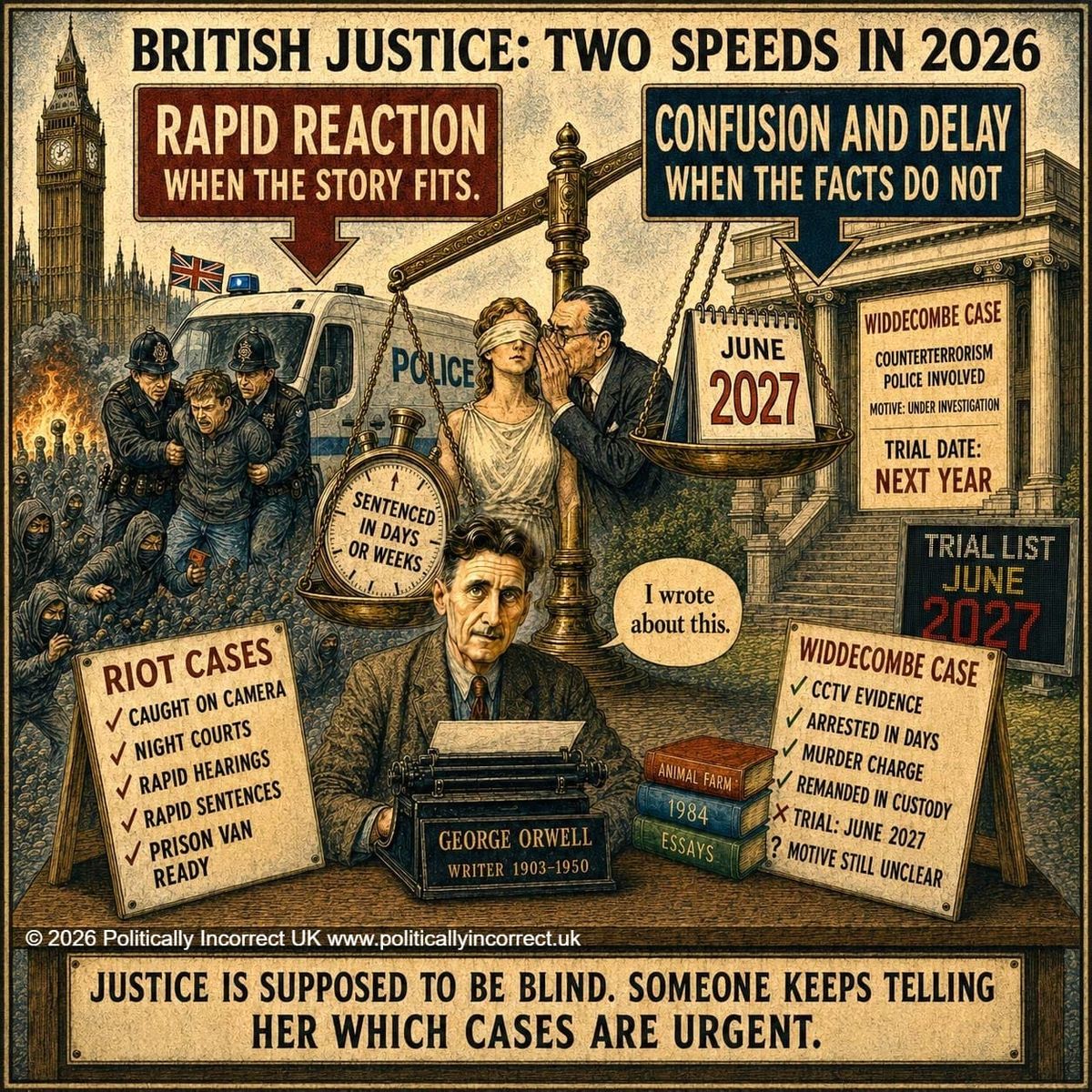
There was a time when justice was pictured wearing a blindfold because she recognised neither rank, politics nor public pressure.
In 2026, however, somebody appears to be whispering the timetable into her ear.
When a case fits the approved public narrative, the machinery moves with astonishing efficiency:
Caught on camera.
Night court.
Rapid hearing.
Rapid sentence.
Prison van waiting.
But when the facts are awkward, the same machine suddenly discovers patience:
Questions remain unanswered.
The motive is “still under investigation.”
The courtroom diary becomes remarkably crowded.
The trial disappears into next year.
The issue is not that riot offences were dealt with too quickly. Justice should act promptly when the evidence is clear. The issue is whether that same urgency, determination and transparency are applied consistently—especially in grave cases involving alleged murder or terrorism.
Swift justice for one defendant and prolonged uncertainty for another do not look like equal justice. They look like justice being managed according to narrative, optics and political convenience.
George Orwell did not merely warn us about governments telling lies. He warned us about systems that teach the public to accept two contradictory standards at once - and call both of them justice.
A blindfold is meant to prevent favouritism.
It is not meant to stop Lady Justice noticing that one side of her scales has been fitted with an express lane while the other has been told to take a number.
Justice delayed may be justice denied.
But selective urgency is something worse: it teaches the public that the law does not merely weigh the evidence- it first asks whether the story fits.
“Do not pervert justice; do not show partiality to the poor or favoritism to the great, but judge your neighbor fairly..” - Leviticus 19:15