THEY MOVE AT LIGHT SPEED - BUT ONLY IN ONE DIRECTION
Why is alleged far-right extremism announced instantly, while evidence of far-left extremism produces hesitation, reviews and delay? A satire on political labels and selective urgency.
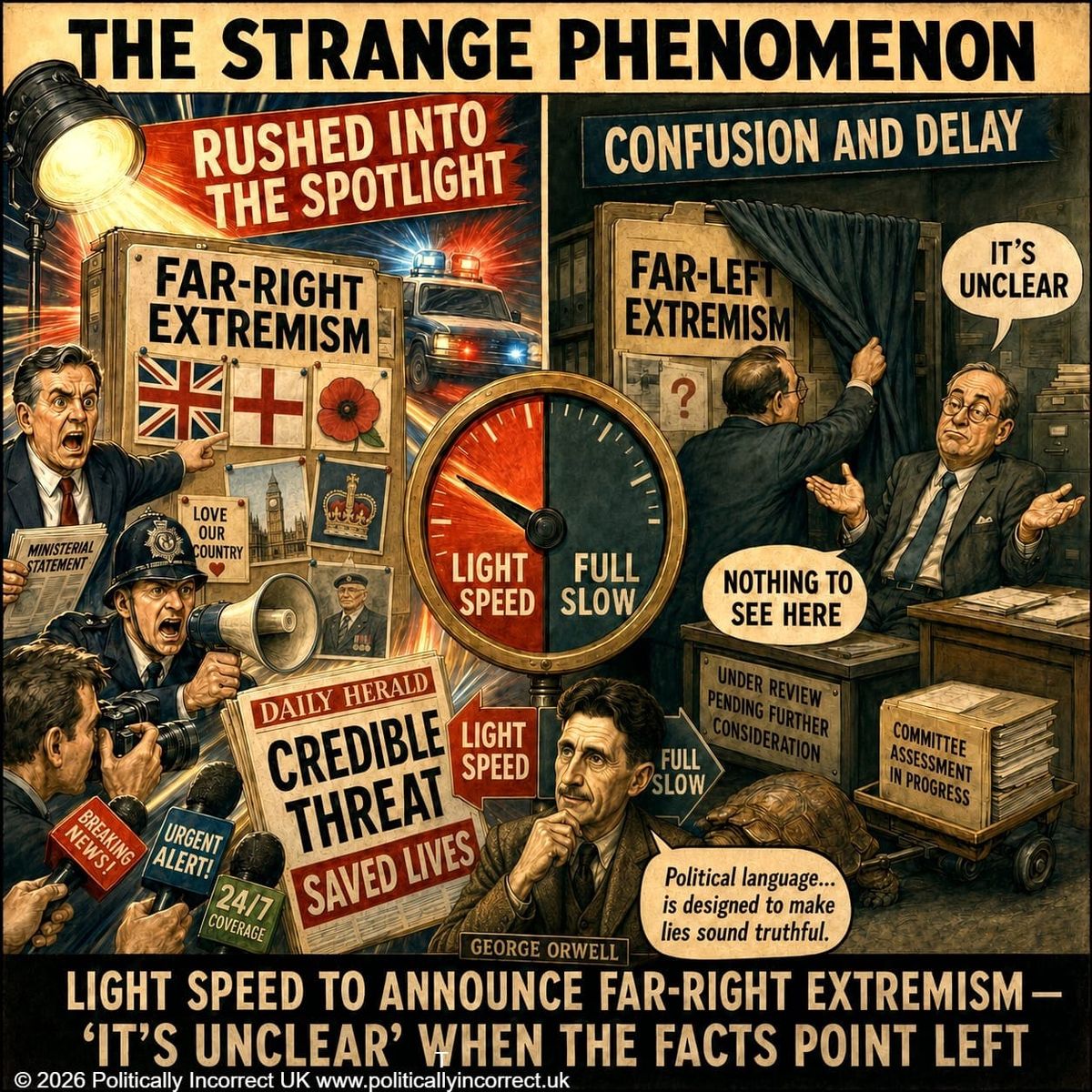
An alleged “far-right terror plot” is announced.
The police move fast.
The Home Secretary goes public.
The media switch on the sirens.
The headlines scream.
The nation is told lives were “undoubtedly saved.”
Then, a few days later?
No terror charges.
The great “credible threat” quietly evaporates.
No equal fanfare.
No equal outrage.
No equal apology.
Meanwhile, when the facts begin pointing toward far-left extremism in the murder of Ann Widdecombe, suddenly the language changes:
“It’s unclear.”
“Motive under investigation.”
“Nothing definite yet.”
How extraordinary.
When the narrative points Right, certainty arrives before the ink is dry.
When the evidence points Left, everyone develops a touching respect for caution, nuance, process, complexity, context, review, assessment, and the importance of not rushing to judgment.
So the contrast is becoming impossible not to notice:
Far-right extremism: spotlight, sirens, statements, certainty.
Far-left extremism: fog, delay, hesitation, “nothing to see here.”
That is why people are losing confidence—not just in the media, but in the credibility of the police and the political machinery surrounding them.
Because if one kind of extremism is announced at light speed, while the other is buried under a blanket of confusion and delay, then the public is not watching equal justice.
They are watching narrative management.
As Orwell might have observed, when political language is used to make lies sound truthful, the first casualty is not only truth - it is trust.